

Product compliance is one of the most commonly mismanaged parts of product development. Not because companies do not care about it: but because it is often treated as something to sort out at the end, after the design is done and the tooling is already cut.
That approach is expensive. Here is why, and what to do instead.
What Product Compliance Actually Means
Compliance refers to meeting the regulatory and safety requirements that apply to your product in the markets you want to sell in. These requirements vary by product type, by country, and sometimes by state or region.
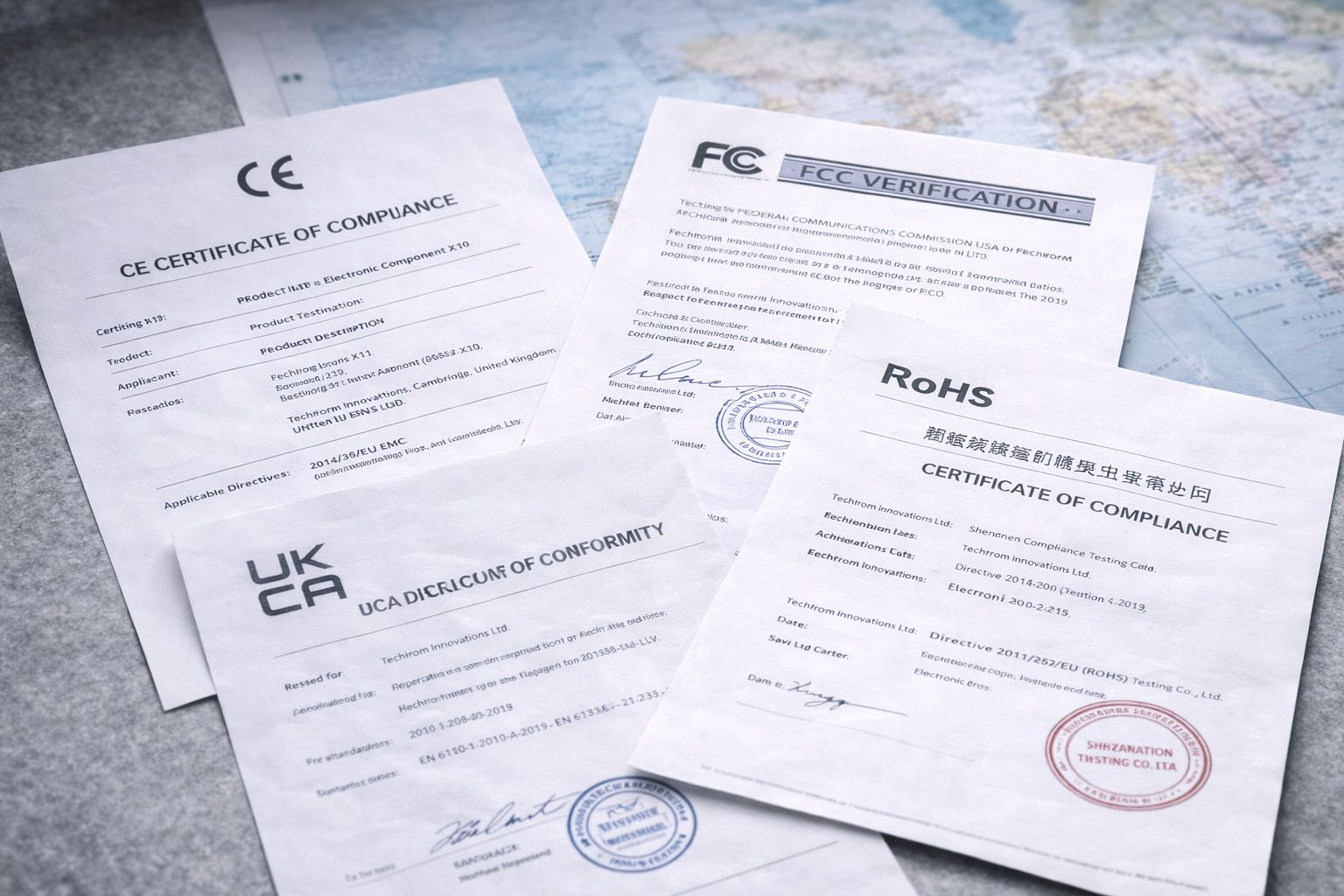
In New Zealand and Australia, many products must meet AS/NZS standards and carry the RCM mark. In the United States, electrical products typically require FCC certification. Products sold in Europe need CE marking. Medical devices have their own separate regulatory pathways: TGA in Australia, FDA in the USA, Medsafe in New Zealand.
The specific requirements that apply to your product depend on what it is, what it does, and where you are selling it. Getting clarity on this early is the point.
Why Late Compliance Planning Is So Costly
When compliance is left until after the design is finalised, you run into a predictable set of problems.
Material choices may not be compliant. Certain materials are restricted or banned in particular markets. If you have already tooled a product in a non-compliant material, you are facing either a full remould or an expensive material substitution.
Dimensions and configurations may need to change. Some compliance standards dictate specific dimensional requirements: for example, gap sizes in products used around children. If these have not been designed in, they need to be retrofitted.
Labelling may not be designed in. Compliance markings, warning labels, and certification marks need to appear on the product or packaging. If the packaging has already been designed without space for these, the artwork needs to be redone.
Testing may fail and require redesign. If a product goes to test and fails, the changes required to pass may require new tooling, new prototypes, and a delayed launch. All of this costs money and time.
What Early Compliance Planning Looks Like
When compliance is planned at the design stage, none of these problems exist: because the requirements are built into the design decisions from the start.
Early compliance planning means identifying the applicable standards for your product and target markets before the design is finalised. It means making material choices that are compliant from the start. It means designing packaging and labelling with the required markings already accommodated. It means scheduling testing at the right stage of development so any required changes can be made before tooling is committed.
This is not about doing more work. It is about doing the work in the right order.
How We Handle Compliance at Pro-Dev
At Pro-Dev, compliance planning is part of the design process, not a separate phase at the end. We identify the applicable standards for your product and target markets during the initial design stage, and we build those requirements into every design decision: material selection, geometry, labelling, and packaging.
We work with internationally accredited test labs including SGS and ITS to coordinate testing at the right stage of development. We have experience with compliance for NZ (AS/NZS), Australia (RCM), USA (FCC, UL, CPSC, FDA), and EU (CE, RoHS) markets.
If you are developing a product and are not sure what compliance requirements apply, that is a good reason to get in touch early. The conversation is free. The cost of finding out late is not.
