

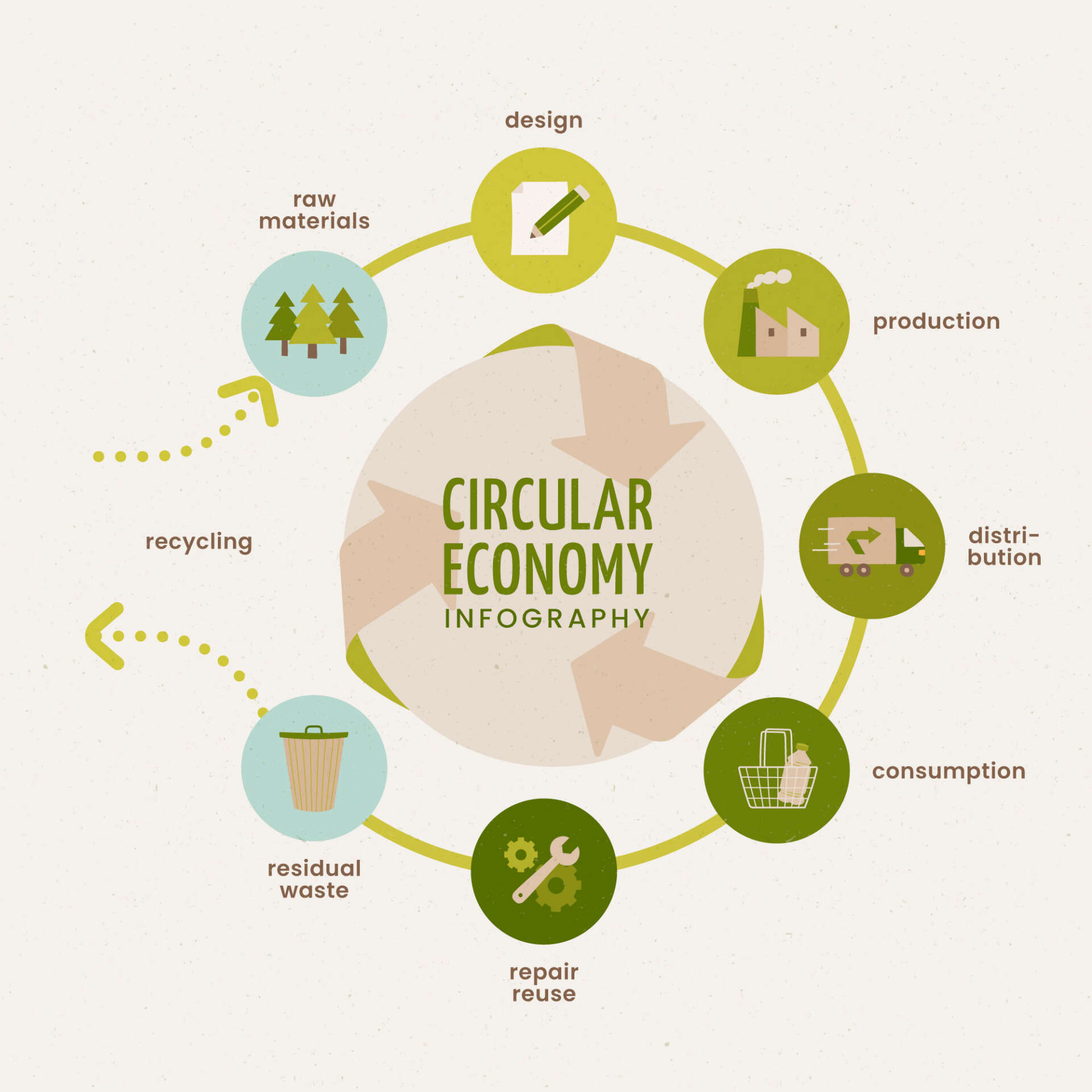
The circular economy is an alternative to the traditional take-make-dispose model of production. Instead of designing products to be used once and discarded, circular design aims to keep products and materials in use for as long as possible, and to recover and regenerate materials at the end of a product life. To take the next step, Pro-Dev’s sustainable product design service helps embed circular thinking into real products.
For product designers, this translates into practical design decisions that can be made from the start of a project.
Design for Durability
The most circular product is one that lasts. Designing for durability means choosing materials that perform over the long term, specifying appropriate tolerances and surface finishes for the use environment, and testing for real-world conditions rather than ideal ones. A product that lasts twice as long has half the environmental footprint per year of use.
Design for Repair
Products that can be repaired stay in use longer. Design for repair means using standard fasteners rather than proprietary or glued assemblies, designing wear components to be replaceable, making internal components accessible to a repairer, and providing (or enabling) documentation for repair.
Right to repair legislation in the EU, Australia, and the USA is making this increasingly a regulatory requirement as well as a good design practice.
Design for Disassembly
At the end of a product’s life, it needs to be either repaired, remanufactured, or its materials recovered. Designing for disassembly means enabling products to be taken apart cleanly: using reversible fasteners, minimising the number of different materials in a single assembly, and avoiding adhesives that bond different material types together.
Material Selection for Circularity
Some materials are more compatible with circular systems than others. Mono-material products are easier to recycle than multi-material products. Materials with established recycling infrastructure are better than materials that go to landfill. Bio-based materials may have a lower carbon footprint but are not necessarily more recyclable.
The right choice depends on your product, your market, and the available end-of-life infrastructure. Pro-Dev is a member of Plastics NZ and engages with evolving standards around responsible material use. We can help you think through material choices with circular economy principles in mind.
