

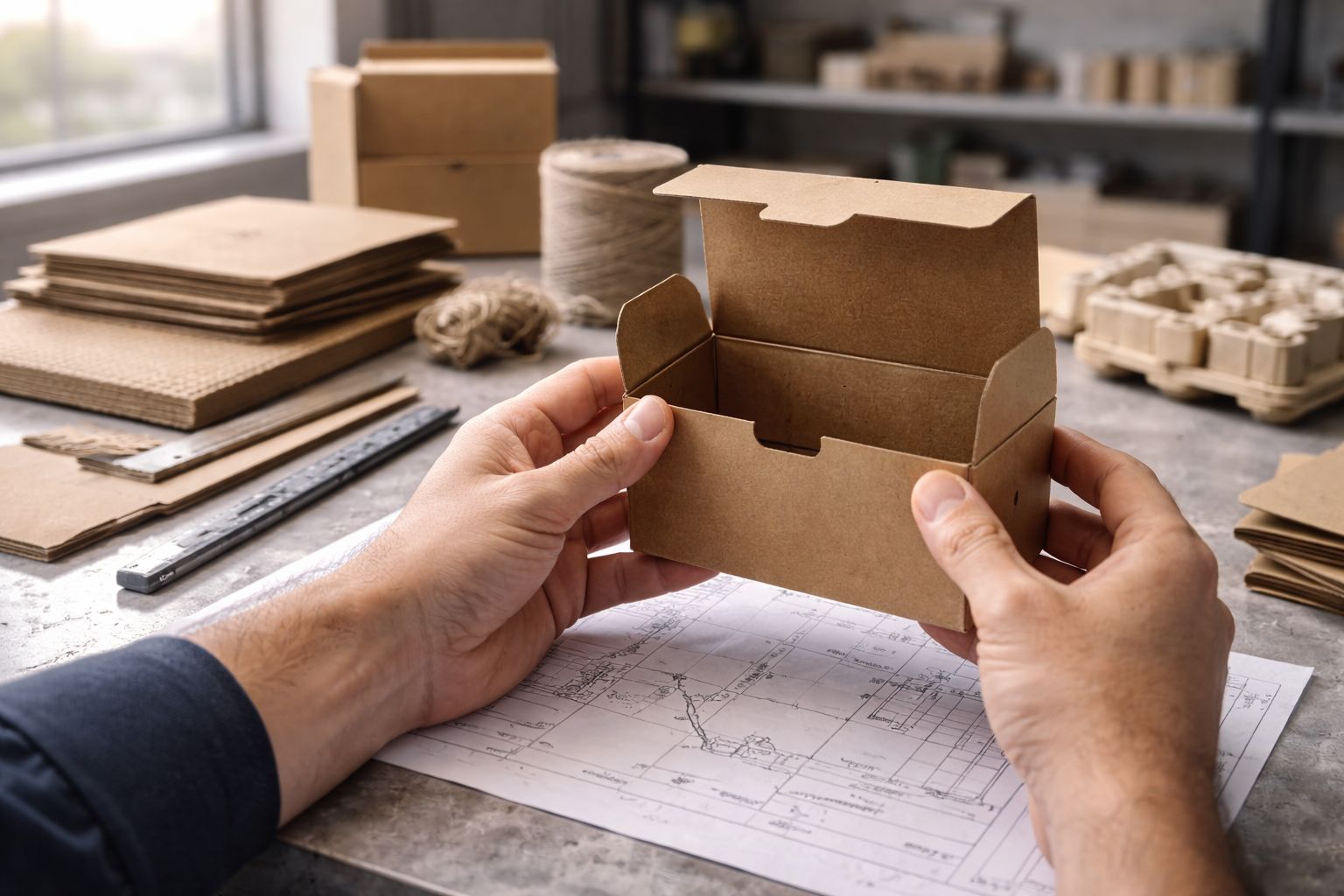
Packaging does two jobs: it sells your product and it protects it. When packaging is designed well, it does both efficiently. When it is designed poorly, it either fails to attract buyers, costs too much to produce, or both. To take the next step, Pro-Dev’s packaging design service balances shelf appeal with manufacturing cost.
How Packaging Sells Your Product
On a retail shelf, your packaging has about three seconds to make an impression before a shopper moves on. In that time, it needs to communicate what the product is, why someone should buy it, and that it is trustworthy enough to hand over money for.
This is a design problem. The shape, size, colour, typography, and information hierarchy of your packaging all contribute to whether it succeeds. Packaging designed to look good in isolation often looks wrong at shelf scale. Good packaging design is done with the retail environment in mind.
Online retail adds different requirements. For e-commerce, packaging needs to photograph well on white backgrounds and communicate quickly in thumbnail size. Unboxing experience matters too: the packaging someone encounters when they open the parcel is part of the product experience.
How Packaging Affects Manufacturing Cost
Packaging cost is determined by materials, complexity, and volume. A bespoke moulded plastic case costs significantly more than a printed cardboard box. A fully lithographed tin costs more than a label on a plain tin. The more complex the packaging, the higher the unit cost and the tooling cost.
The decisions that affect packaging cost most are usually made early in the design process: the outer dimensions of the product (which determine the minimum package size), the number of components (which determines the complexity of any inner packaging), and the target retail environment (which determines what level of packaging investment is appropriate).
Packaging decisions made late in the development process routinely increase cost and delay launch. We consider packaging alongside the product design so that dimensions, materials, and compliance labels are factored in from the start.
Compliance Labelling
Packaging for products sold in regulated markets must carry specific mandatory markings. CE marking for Europe, RCM for Australia and NZ, FCC for the USA, and various country-specific markings for other markets. These need to be designed into the packaging artwork from the start, not added as an afterthought.
We design compliance labelling into packaging as part of our integrated development process.
