

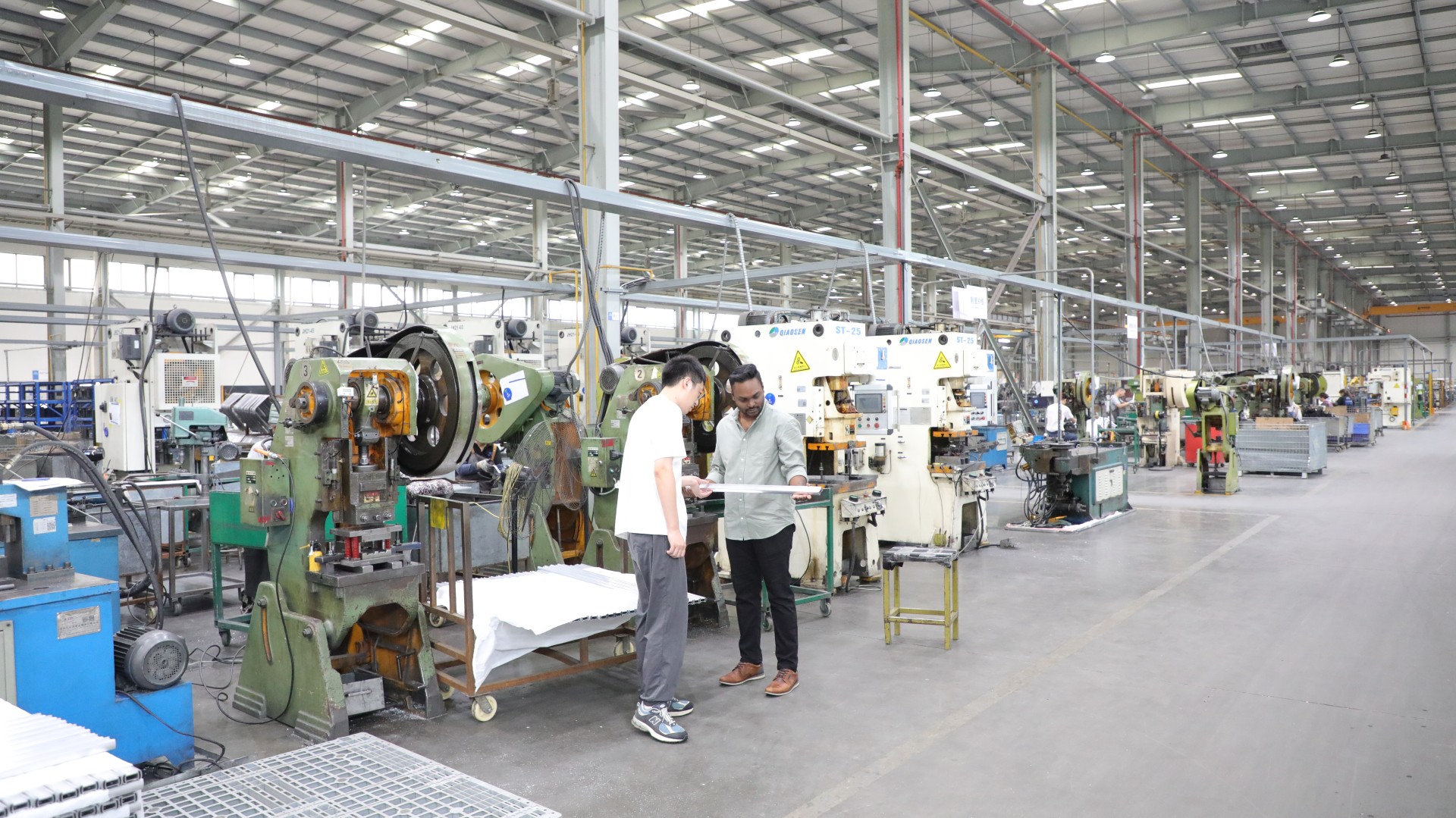
Every manufacturing horror story starts the same way: a factory that looked perfect online. The profiles are polished, the certificates are plentiful, and none of it tells you what you actually need to know. This is how we vet factories for our own supply chain, and what you should check before committing your product to anyone.
First, confirm who you are actually talking to
A surprising share of “factories” on sourcing platforms are trading companies: middlemen reselling another factory’s capacity. A trading company is not automatically bad, but you need to know, because it changes who controls your quality, your tooling and your pricing. Check the business licence, match the company name on the licence to the name on your quotes, and ask directly whether the products will be made in their own facility. Vague answers to that question are an answer.
Check capability, not certificates
The question is never “is this a good factory”. It is “is this a good factory for this product at this volume”. A factory brilliant at large industrial mouldings can be hopeless at small precision parts. Ask what products they run today that are similar to yours in size, material and volume. Ask which processes they own in-house and which they subcontract, because subcontracted processes are where quality quietly escapes everyone’s control. A factory that answers these questions precisely is telling you something good; one that answers every question with yes is telling you something too.
The visit is not optional
Everything a factory sends you is what it wants you to see. What you need is an ordinary Tuesday: the state of the floor, the age of the machines, whether quality checks visibly happen, how materials are stored, and how many lines are actually running. Audit paperwork can be arranged; a working floor at ten in the morning cannot. This is the single reason Pro-Dev keeps its own staff on the ground in China. If you cannot visit yourself and do not have someone there, hire independent eyes. It is the cheapest insurance in the whole process.
Use samples and quotes as tests of communication
A sample tells you two things: whether the factory can make your part, and how it behaves when something is wrong. A factory that flags a problem with your design before you find it is a keeper. One that ships a flawed sample and hopes is showing you exactly how production will go. The same goes for quoting: send a complete package and see what comes back, a discipline we cover in how to get an accurate manufacturing quote.
Protect yourself before you are exposed
Before design files travel: an enforceable NDA, a contract that keeps tooling ownership with you, and files shared on a need-to-know basis. The details are in IP protection when manufacturing in China. Then commit gradually: samples, then a pilot run, then volume, with a first article inspection before any production run is authorised.
When to walk away
Walk when the licence and the quotes carry different company names and nobody can explain why. Walk when every question gets yes for an answer. Walk when prices are dramatically below every other quote, because that gap is your quality budget being removed. And walk when communication is slow and vague before the order, because it only gets worse after your deposit clears.
The honest summary
Vetting a factory properly takes weeks and a presence on the ground, which is exactly why most companies skip it and why the horror stories keep coming. It is also why we run our own vetted supply chain in China rather than sourcing fresh for each project. Whether you use ours or build your own, the checklist is the same. The factories that pass it are out there, and they are worth the effort of finding.
Pro-Dev manages full production through its own supply chain in China and New Zealand: vetted factories, our own people on the ground, quality control before goods ship, and door to door logistics. If you want to talk about your product, get in touch.
