

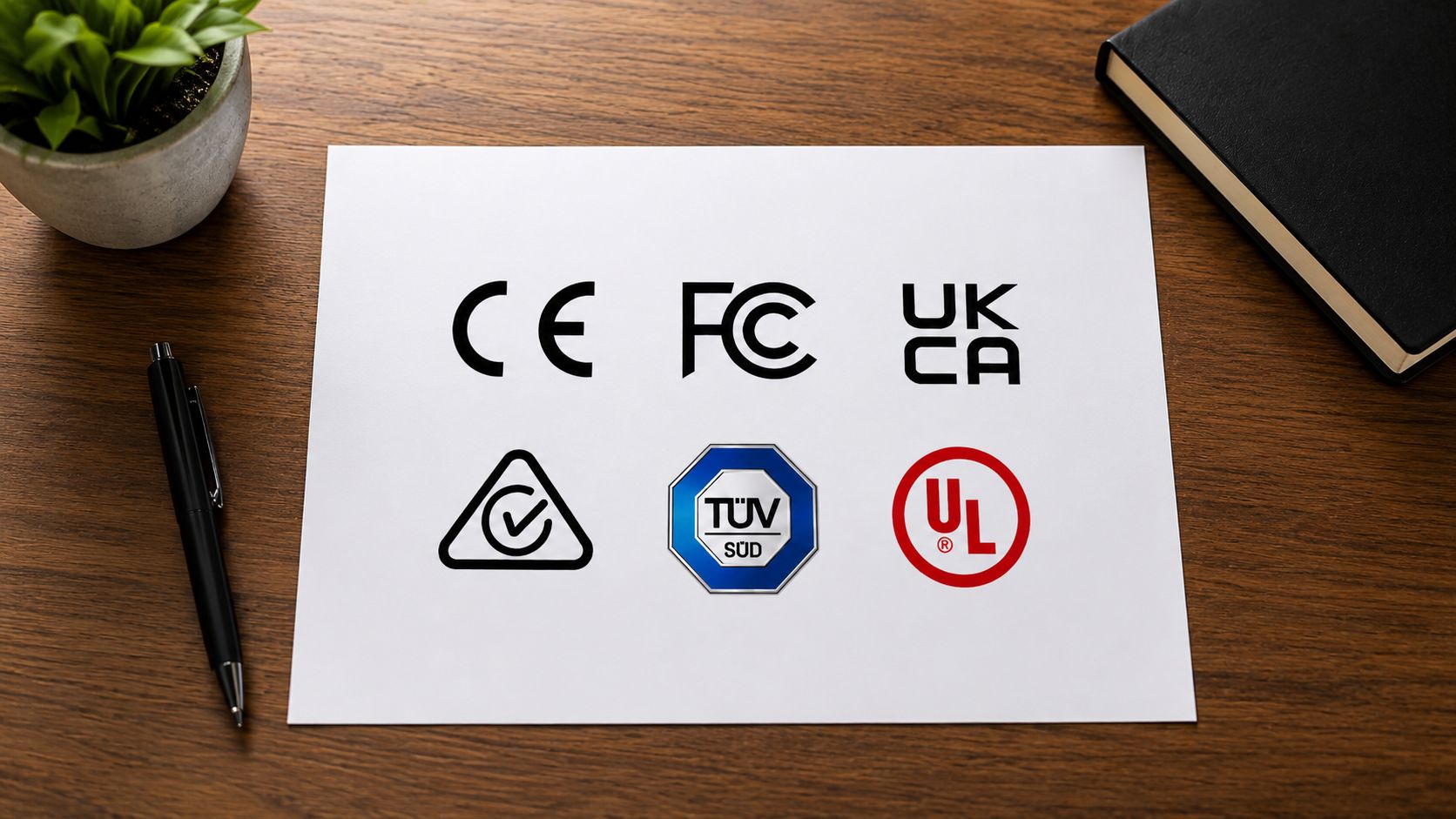
If your product contains electronics and you want to sell it in the United States, the FCC rules apply to you. This guide explains what FCC authorisation actually covers, which route your product takes, and the practical steps from a New Zealand company’s point of view.
What the FCC actually regulates
The Federal Communications Commission regulates electromagnetic interference and radio transmission, not general product safety. Every electronic device emits some electromagnetic noise, and the FCC’s job is making sure your product does not interfere with everyone else’s. That distinction matters: FCC authorisation does not make a product “safe” in the American legal sense, it makes it legal to sell as an electronic device. Electrical safety in the USA runs through separate standards and testing bodies, and serious retailers will ask about both.
Who needs it
Two broad groups. Unintentional radiators are products with digital circuitry that emit noise as a by-product: almost any product with a chip in it qualifies. Intentional radiators are products that transmit on purpose, which today means anything with Bluetooth, Wi-Fi, or any other wireless link. The two groups take different routes through the rules, and a smart product is usually in both.
The two routes: SDoC and certification
Most unintentional radiators go through the Supplier’s Declaration of Conformity: you test at an accredited laboratory, hold the reports, and declare compliance yourself. No FCC ID required, but a US-based responsible party must be identified, which is the detail that catches New Zealand companies out.
Intentional radiators need certification: testing at an accredited laboratory, review by a recognised certification body, and an FCC ID printed on the product. One shortcut makes this far cheaper: using a pre-certified radio module. If your product uses a certified Bluetooth or Wi-Fi module and follows its integration rules, the module’s certification does most of the heavy lifting, and your testing burden drops dramatically. This is a design decision, made during engineering, and it is one of the clearest examples of compliance planning paying for itself.
Labelling and paperwork
Certified products carry their FCC ID on the label. Products under SDoC carry a compliance statement in the manual or on the packaging. Behind both sits an evidence file: test reports, declarations and technical documentation you keep for as long as the product sells. None of it is difficult; all of it has to exist before the first unit lands in the USA.
The steps from New Zealand
Identify which rules your product falls under during engineering, not after. Choose certified modules for any wireless function unless volumes justify certifying your own radio. Design the enclosure and electronics with EMC in mind, because shielding and grounding decisions made in CAD are cheap and retrofitted fixes are not. Test at an accredited lab, which can be done from this side of the world. Appoint your US responsible party. Label correctly, compile the file, and keep it current as the product evolves.
How FCC sits alongside CE and RCM
FCC covers the USA only. Europe asks for CE and Australia and New Zealand use the RCM. A product designed to its standards once can usually be tested for all its target markets in one coordinated round. Our global certification guide compares the three marks side by side.
Where Pro-Dev fits
We treat US requirements as a design input from day one: module selection, EMC-aware engineering, lab coordination and the paperwork through to authorisation, as part of our compliance service. If the USA is on your product’s map, raise it in your first engineering conversation and the FCC becomes a checklist, not a crisis.
Pro-Dev supports product compliance across NZ, Australia, the USA and global markets. If you want to talk about your product, get in touch.
