

Compliance is the least glamorous part of product development and the most expensive one to get wrong. The rules are scattered across different regulators, the requirements change by product category, and nobody hands you a single checklist. This guide is the overview we wish every founder had before their first consultation.
The short version
Every product sold in New Zealand must be safe and honestly described. Beyond that baseline, your obligations depend entirely on what the product is. An electrical appliance, a children’s toy, a food container and a garden tool live under four different sets of rules. The first compliance task on any project is simply working out which rules apply to yours.
The baseline: consumer law
Two laws cover every product sold here. The Consumer Guarantees Act requires products to be of acceptable quality, fit for purpose and durable. The Fair Trading Act bans misleading claims and gives the government power to set mandatory product standards and issue recalls. There is no certificate to earn for these. They are simply the standard your product is held to once it is in a customer’s hands, which is why honest engineering margins and real durability testing matter commercially, not just morally.
Electrical products: RCM marking
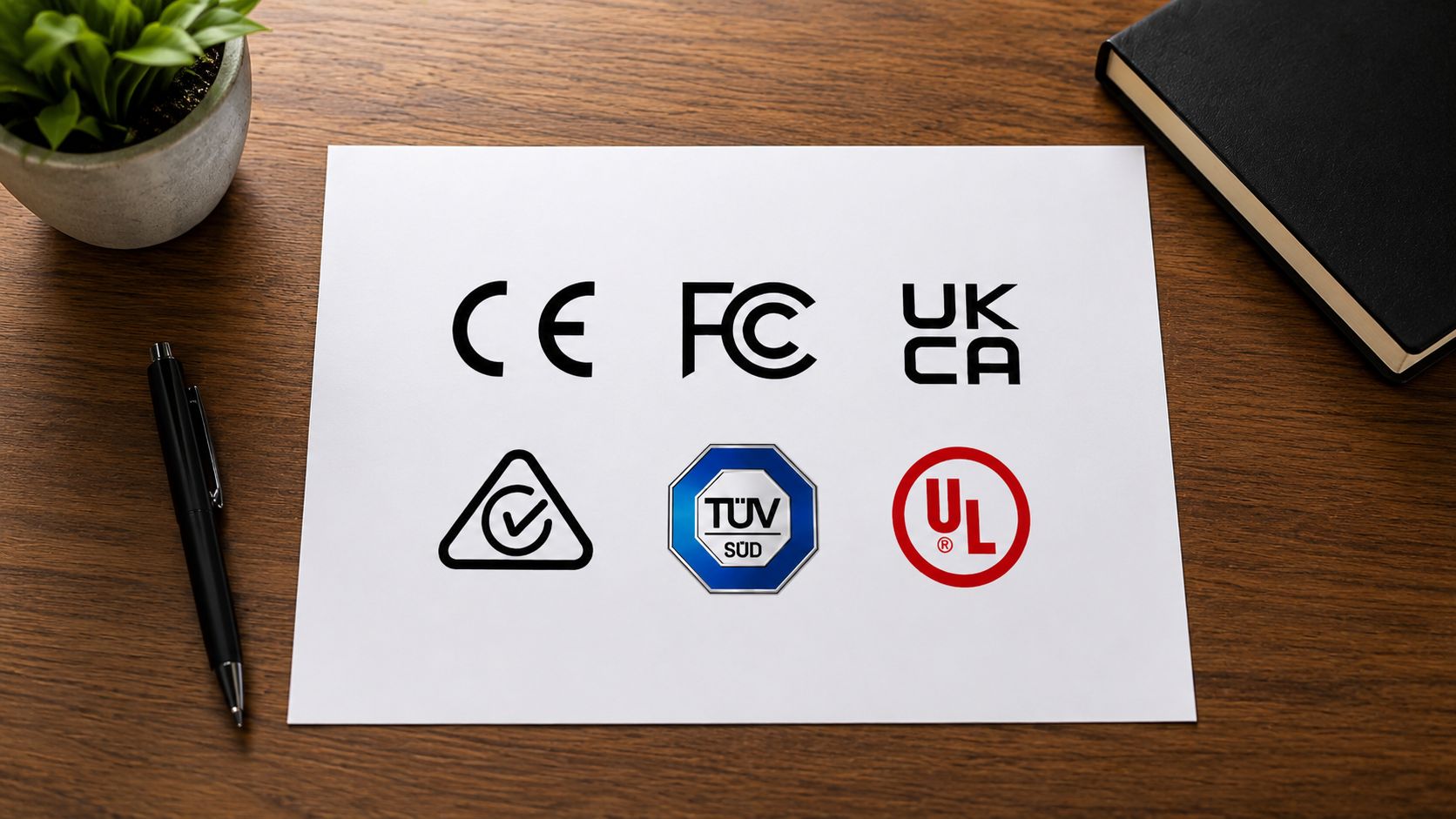
Anything with a plug, a battery charger or a mains connection falls under the electrical safety regime that New Zealand shares with Australia. Products are classified by risk level, higher risk products need certification before sale, and the RCM mark shows compliance. Radio and wireless products, which now includes almost anything with Bluetooth or Wi-Fi, have their own additional requirements. Our global certification guide covers how RCM sits alongside CE and FCC if you plan to sell beyond NZ and Australia.
Children’s products: the strictest category
Toys for children under three have a mandatory safety standard in New Zealand, and products for children generally attract the closest scrutiny of any category. Small parts, button batteries, cords and magnets each carry specific hazards that standards address in detail. If your product is for children, or will predictably end up in their hands, compliance planning starts on day one of design, not at the end.
Food contact, medical and other special categories
Products that touch food need materials verified as food safe. Medical devices have their own regulatory pathway, which we cover in our guide to medical device development in NZ. Cots, prams, bikes, sunglasses and several other categories carry mandatory standards under the Fair Trading Act. None of this is difficult to comply with once identified. All of it is expensive to discover late.
What compliance actually costs
The testing itself is usually the smaller cost. Lab testing for a typical consumer product runs from hundreds to a few thousand dollars depending on category. The real cost of compliance is the redesign that happens when a product was designed without its standards in mind: new materials, new tooling, a missed launch window. A product designed to its standards from the start usually passes first time, and the testing becomes a formality rather than a gamble.
How we handle it at Pro-Dev
Compliance is a design input, not a final exam. During the engineering stage we identify every standard for every market you plan to sell into, design to them, then coordinate the testing and certification at the end. The practical steps look like this: define your target markets early, because NZ, Australia, the USA and Europe each ask for different marks. Identify the standards during engineering. Design to them. Test once.
If you already have a product and you are not sure what applies to it, that is a normal place to be. It is exactly the question our compliance service exists to answer, and working it out early is the cheapest compliance decision you will ever make. We also cover why timing matters so much in planning compliance before finalising your design.
Pro-Dev supports product compliance across NZ, Australia, the USA and global markets: standards identification, testing coordination and certification. If you want to talk about your product, get in touch.
